Perovskite-Silicon Tandem Cells Hit 33.9% Efficiency: A Record, Not a Revolution
Researchers certified a 33.9% efficient perovskite-silicon tandem solar cell. It matters for Singapore's space-constrained roofs, but commercial panels are still 2 to 4 years away.
Why should this article concern you?
- 1
33.9% certified efficiency for perovskite-silicon tandem cells, up from 33.2%, a new world record
- 2
A 33% panel generates 44% more power than today's 23% silicon on the same Singapore roof area
- 3
Commercial availability is 2028-2030 at earliest; waiting costs years of grid electricity bills

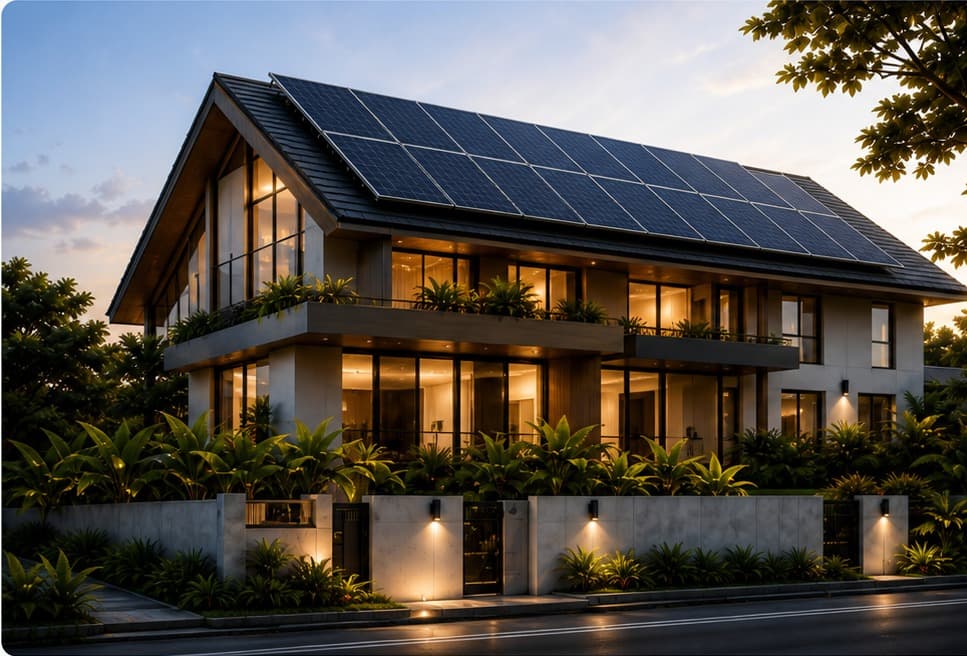
A research team certified a perovskite-silicon tandem solar cell at 33.9% power conversion efficiency, the highest ever recorded under standard test conditions, according to PV Magazine's certification report. For a terrace house where every square metre of roof is precious, this trajectory matters. The Singapore solar panel cost guide shows what today's silicon technology costs while tandem cells are still in labs.
There is a gap between a lab record and your roof, and it is measured in years, not months.
What the Record Actually Means
The previous certified record stood at 33.2%. Standard silicon panels used in Singapore residential installs today run at 21% to 23% efficiency. The 33.9% figure comes from a controlled lab environment, measured in square centimetres, not the square metres of a commercial panel on your roof.
The reason this matters is the ceiling conventional silicon is approaching. Single-junction silicon tops out at around 26-27% in practical conditions, a physics limit, not an engineering problem. Perovskite stacked on silicon breaks through it by absorbing a wider spectrum of sunlight.
What It Means for Singapore Rooftops
Singapore's landed homes operate under one real constraint that matters more here than elsewhere: roof area. A terrace house roof typically supports 10 to 18 kWp depending on orientation and shading. A 33% efficient panel on the same roof area as a 23% panel generates 44% more electricity.
For a terrace that currently maxes out at 12 kWp, a future tandem system could deliver 17 kWp without adding a single panel.
Note: these efficiency comparisons assume identical panel dimensions, which commercial tandem products may not maintain at launch. Real-world gains depend on the manufacturing format each company chooses. Check manufacturer spec sheets when commercial products are announced.
When those panels do arrive, whether your roof can take advantage of them depends on the same structural factors that matter today: pitch, orientation, shading, and load-bearing capacity.
When Does This Reach Your Roof?
The honest answer: not soon. Mass production challenges around perovskite stability, lead content regulations, and manufacturing yield remain unsolved at commercial scale. The three manufacturers closest to market: LONGi, Hanwha Q Cells, and Oxford PV, put first commercial tandem products at 2028 to 2030. Price parity with premium silicon panels is likely another two to three years after that.

Should You Wait?
A homeowner who waits until 2030 for commercial tandem panels will have paid at least S$20,000 in rising grid electricity before they generate a single unit of solar power.
A homeowner who installs today at a 3.5-year payback starts generating returns in 2030. A homeowner who waits until 2030 starts in 2035 at best, five years of bills paid to SP Group for nothing.
The efficiency gap between today's panels and 2030 tandems is real. The opportunity cost of waiting for that gap to close is also real, and it compounds every quarter. When you run your estimate, look at the 10-year and 25-year savings columns. EMA's Singapore Energy Statistics show grid electricity consumption per household rising each year. The bills you pay while waiting move those numbers far more than the efficiency difference ever will. For the financial case in concrete terms, see the honest payback calculation for a Singapore landed home.
Further reading: the current panel technology comparison for what is available today · how Singapore's heat affects panel efficiency ratings · EMA approved equipment list.
What does this mean for your home?
- The efficiency gap between lab records and your roof is measured in years, not months. The 33.9% certified cell is not a commercial product. Commercial tandem panels are 2028 to 2030 at earliest, then another two to three years to reach price parity with silicon. A system installed today at a 3.5-year payback is already generating returns by the time first commercial tandems ship.
- Watch announcements from LONGi, Hanwha Q Cells, and Oxford PV if you plan to wait. These are the three manufacturers closest to commercial tandem products. When they announce availability and pricing, compare the new option against the standard silicon economics at that point in time, not against today's silicon prices.
- If your roof already fits 10 kWp or more of standard silicon panels, waiting adds no financial benefit. Run the Sunnify estimate with your roof dimensions. If the current technology already covers your electricity needs on your available roof, the additional watts per panel from future tandem efficiency do not improve your return.
Your Questions Answered
Should I wait for perovskite panels before installing solar in Singapore?
No. Commercial tandem panels arrive 2028-2030 at earliest, then need 2-3 more years to reach price parity. A silicon system installed today at a 3.5-year payback starts returning savings in 2030, the same year first commercial tandems ship. Every quarterly bill you pay while waiting compounds faster than any efficiency gain will recover over the panel's 25-year lifespan.
What solar panel efficiency can Singapore homeowners buy today?
Singapore installers currently fit panels rated 21-23% efficiency from manufacturers like LONGi, Jinko, and Canadian Solar. At 23% on a typical terrace roof, you can fit 10-15 kWp depending on orientation and shading. At the lab-certified 33.9% tandem record, the same roof area would support 17+ kWp, but that option does not exist commercially yet. Check EMA's approved module list for what's available now.